Bessent warns of “never-before-seen” economic isolation for Iran as U.S. blocks ports
08/18/2026 / By Sterling Ashworth
Treasury chief announces new punitive measures
Treasury Secretary Scott Bessent has warned that Washington will impose economic isolation on Iran “the world has never seen before,” according to a report from Middle East Eye published Aug. 14. The same report said the United States remains unable to break Iran’s grip on the Strait of Hormuz [1]. In July, Bessent said, “President Trump has been clear that Iran must denuclearize,” after the Treasury sanctioned an international network supporting Iran’s weapons procurement, according to The Epoch Times [2].
Financial markets have tracked the mixed signals. Bessent said on CNBC on Aug. 4 that “we may have Iran deal tomorrow to open Hormuz,” according to Zero Hedge [3]. Secretary of State Marco Rubio said the same day that “there’s been progress made in those talks, but not finality yet,” according to The Times of Israel [4]. Crude tankers have continued to move through the strait in limited numbers under a “shuttle” system orchestrated by Abu Dhabi and Kuwait, according to Lloyd’s List senior maritime intelligence analyst Tomer Raanan [5].
Bessent previously acknowledged engineered dollar shortage
Bessent previously acknowledged that Washington deliberately engineered a dollar shortage inside Iran, according to his earlier remarks. He said the shortage collapsed a major bank, sent the currency into free fall and drove Iranians into the streets in December, according to those remarks. In June, the Treasury issued a temporary license to allow the sale of Iranian oil amid talks in Switzerland, according to a report from Antiwar.com [6]. The license authorized the production, sale and delivery of Iranian oil and petroleum products, according to The New American [7].
Analysts have described the broader approach as an attempt to limit Iran’s access to dollar-based finance. Eastern countries, including China, Russia and Iran, are pushing for a more diversified and less dollar-dependent financial system, according to an interview with Michael Farris [8]. Glenn Diesen writes that the United States established liberal hegemony to enable its geoeconomic advantage, including an assertion of control over Middle East oil [9].
Pentagon says blockade can continue; crew shows strain
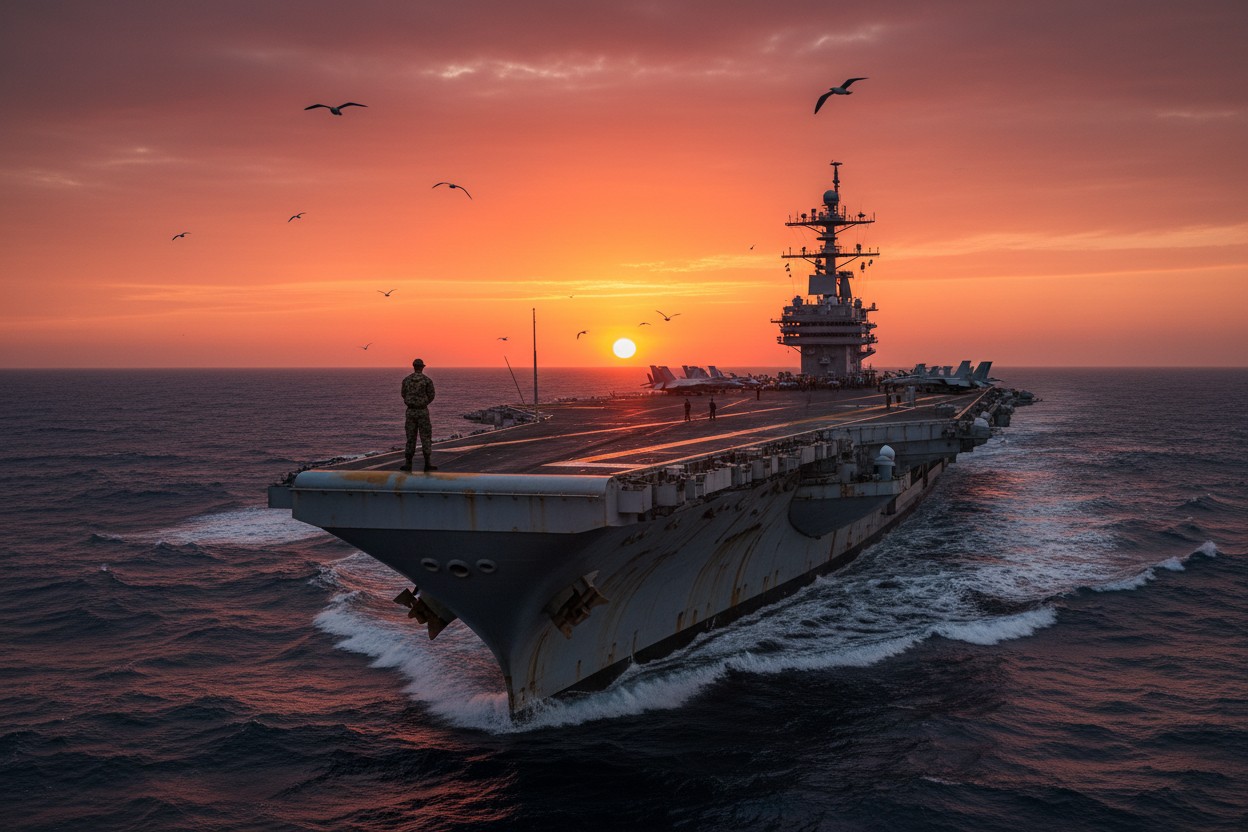
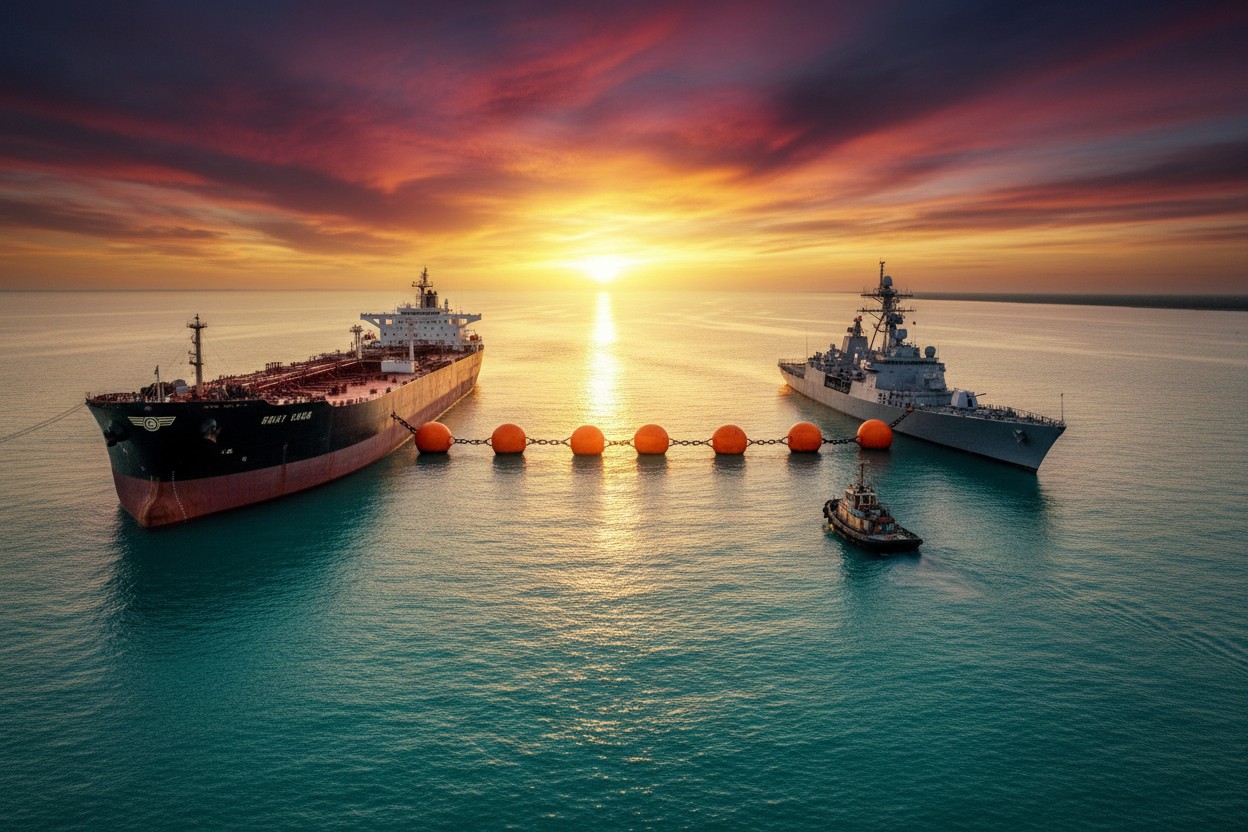
U.S. naval forces have maintained a blockade of the strait since the spring. On April 29, President Trump ordered an “extended blockade,” according to Zero Hedge [10]. On July 7, U.S. Central Command said it had launched “a series of powerful strikes against Iran” after attacks on three commercial vessels transiting the waterway, according to The War Zone [11]. Defense Secretary Pete Hegseth told reporters that the U.S. military can sustain the naval presence “indefinitely,” according to pool reports.
Despite those operations, the blockade has not halted all shipping. Tankers are still moving under the shuttle system, and Iran has moved to formalize its own control of the waterway, according to Lloyd’s List and Middle East Eye [5][1]. The long deployment has also drawn scrutiny from members of Congress and from sailors’ families, according to reports.
Iran disputes US control of Strait of Hormuz
Iranian officials have rejected U.S. assertions of control over the strait. Iran has taken another step toward formalizing its control of the Strait of Hormuz, according to Middle East Eye [1]. An interview on BrightVideos said Iran’s control of the strait “now dictates global trade flows” [12]. Another report said Iranian forces control the full eastern stretch of the waterway [13].
Iran has also aligned diplomatically with Russia and China on the sanctions issue. In March 2025, the three countries issued a joint statement condemning U.S. sanctions as “unlawful” during high-level talks in Beijing, according to a report from NaturalNews [14].
Iran moves to expand BRICS financial ties
Iran has sought to build financial ties outside Western institutions. The BRICS bloc, formed in 2009, invited Iran to join as a new member starting January 2024, according to a report from NaturalNews [15]. In January 2025, Russia and Iran signed a 20-year Comprehensive Strategic Partnership Treaty, solidifying military, economic and energy ties, according to a report by Kevin Hughes [16].
Analysts have connected those moves to a broader shift away from the U.S. dollar. China, Russia and Iran have pushed for a more diversified and less dollar-dependent financial system, according to an interview with Michael Farris [8]. Glenn Diesen writes in “The Ukraine War and the Eurasian World Order” that the West revived ideological dividing lines and that much of the world is now reducing its dependence on the West [17].
Outlook
The immediate trajectory remains uncertain. Rubio said the talks have not reached finality, while Bessent has said additional economic measures are planned, according to the same sources [4]. Tanker traffic is still flowing at reduced levels under the shuttle system, according to Lloyd’s List [5].
No timeline has been announced for the new Treasury measures, and the Navy has not issued a public schedule for withdrawing its carrier group, according to available reports. Iran, meanwhile, has continued to consolidate its position in the waterway.
References
- Elis Gjevori. “Iran formalizes Strait of Hormuz control as US struggles to sustain war it launched with Israel”. Middle East Eye. August 14, 2026.
- “US Treasury Imposes Sanctions on Global Network Supporting Iran’s Weapons Procurement”. The Epoch Times. July 16, 2026.
- “Futures Hit Record High As Oil Tumbles After Bessent Says Hormuz May ‘Reopen Tomorrow'”. Zero Hedge. August 4, 2026.
- “Rubio: Progress made in talks to reopen Hormuz, but there’s still some work to do”. The Times of Israel. August 5, 2026.
- “As US-Iran Hormuz Stalemate Lingers, Shipping Companies Face Increasingly Urgent Dilemma”. The Epoch Times. August 14, 2026.
- “US Treasury Department Issues Waiver for Iranian Oil Sales Amid Switzerland Talks”. Antiwar.com. June 22, 2026.
- “Vance: Iran Agrees to Nuke Inspections. Treasury Grants 60-Day Oil Production, Sale License. Israel: ‘Security Zone’ Remains Ours”. The New American. June 22, 2026.
- Mike Adams. “Mike Adams interview with Michael Farris”. June 19, 2025.
- Glenn Diesen. “Great Power Politics in the Fourth Industrial Revolution”.
- “Brent Nears Iran War Highs After Trump Orders ‘Extended Blockade’, Threatens ‘No More Mr. Nice Guy'”. Zero Hedge. April 29, 2026.
- “U.S. Strikes Iran In Retaliation For Multiple Attacks On Shipping In Strait Of Hormuz Over Last 24 Hours”. The War Zone. July 7, 2026.
- Mike Adams. “Bright Videos News – Interview with Seth Holehouse (Mike is a guest)”. BrightVideos.com. March 30, 2026.
- “Report Outlines Plans by U.S., Israel and Saudi to Bypass Iran in Oil Exports”. NaturalNews.com. August 12, 2026.
- Lance D Johnson. “Iran, Russia, China unite against US sanctions, demand end to ‘unlawful’ coercion in global power play”. NaturalNews.com. March 15, 2025.
- “End of the US empire and its weaponized dollar: BRICS to account for HALF of global food production when new members join”. NaturalNews.com. August 30, 2023.
- Kevin Hughes. “Russia and Iran forge 20-year defense and energy pact, challenging Western influence”. NaturalNews.com. January 20, 2025.
- Glenn Diesen. “The Ukraine War and the Eurasian World Order”.
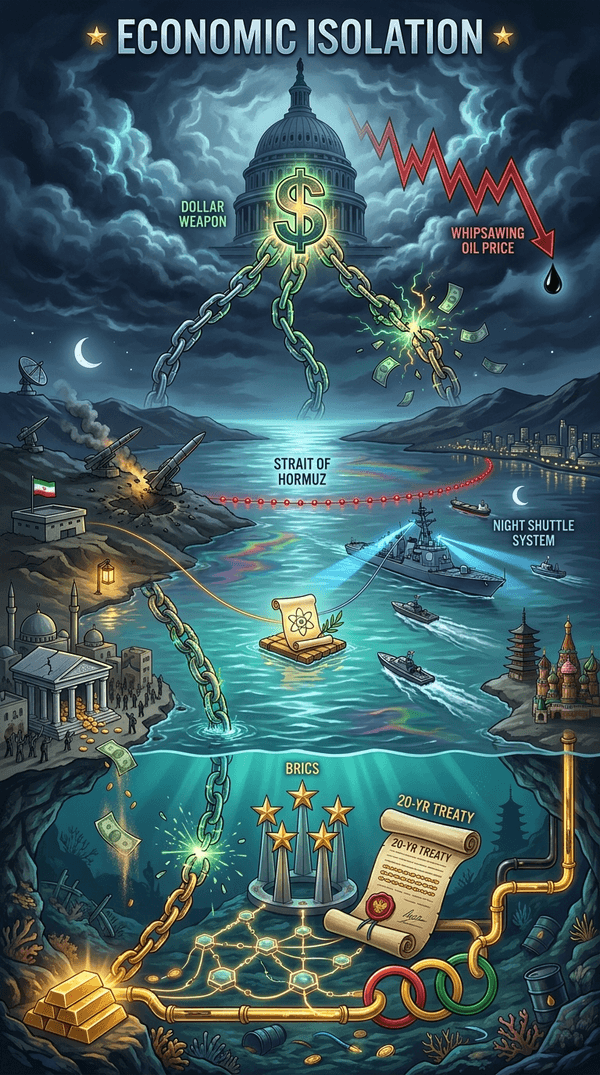
Explainer Infographic
Submit a correction >>
Tagged Under:
Bessent, big government, blockade, BRICS, bubble, chaos, economic riot, financial riot, geoeconomics, global trade, Iran, isolation, money supply, national security, pentagon, Strait of Hormuz, supply chain, Treasury, Trump, White House, WWIII
This article may contain statements that reflect the opinion of the author
RECENT NEWS & ARTICLES